A nuisance pest, but not harmful
Box Elder Bugs do not pose any risk to building structures, however, their droppings may occasionally leave marks or stains on indoor surfaces.
They can't bite, they don't eat anything on the inside of your house, including house plants, and they won't harm you, your family or your pets.
Life Cycle
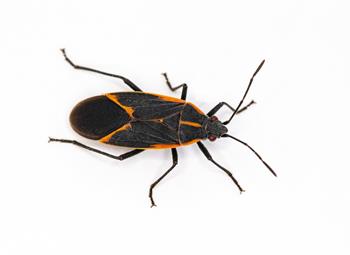 An image of a Box Elder Bug
The adult bugs lay eggs on the host trees in the spring and the nymphs emerge in a few days. The nymphs are small and show more red than adults. These nymphs develop into adults during the summer, then mate and lay eggs, which hatch into the nymphs of the second generation. In the summer Box elder bugs normally feed on the leaves, flowers, and seed pods of the boxelder tree, also known as a Manitoba Maple. The bugs cause little to no damage to trees. Activity of nearly fully grown nymphs is noticed in August and September when they gather in large numbers on the trunks of box elder trees. The migration of the adults begins at this time.
Summer and fall: Once Box elder bugs have moved into the cavities of a home in the fall, there is little that can be done to eliminate them. Control or exclusion must be done in the summer and fall. Caulking windows and doors, and repairing window and door screens will prevent bugs from entering a home.
Winter and spring: When the bugs decide it's time to leave the cavities in a home, some of them may be attracted to the warm atmosphere in your living space. They want to get outside but inadvertently end up inside. A good way to eliminate them is to vacuum the bugs up with a long hose attachment. If you squash them, they may stain the walls or fabric. Remember, they are harmless to humans and homes.
What Eats Box Elder Bugs?
There are few natural predators of these relatively harmless bugs and even fewer that homeowners want in their yards. Rodents, a limited number of other insects and a few bird species will eat boxelder bugs but there are a number of other control methods that can help reduce their numbers.
Why so Few Predators?
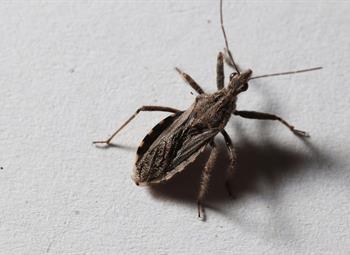 An image of a Wheel Bug
Brown-black boxelder bugs sport red lines behind their heads, red veins in their wings and the abdomen beneath their wings is red. The red colour acts as a warning to predators to avoid this food source as it could be poisonous or distasteful. Boxelder bugs produce an unpleasant odor when crushed, although they are not poisonous.
Rodents: Mice, rats, chipmunks and most of the other rodents will eat boxelder bugs. Even these rodents will not eliminate a large infestation as they will only eat a limited number at one time and only if a more desirable food source is not at hand.
Spiders, Praying Mantis and Wheel Bugs: Some species of spiders will eat boxelders as will praying mantis. Leave any spider webs intact near an infestation. Praying mantis are incredible predators that patiently stalk their prey then use their spiked front legs to snare it. Wheel bugs, called the assassins of the insect world, are named for the cog-like structure on their backs. One of the few insect predators of boxelder bugs, it injects its prey with enzyme-laden saliva to immobilize it and then sucks out the bug's body fluids.
Control Methods
Boxelder bugs can travel a good distance from their food source to a sunny house wall. Keep bugs from getting inside by sealing any openings, like those around phone lines and outdoor faucets, with caulking. Use a shop vacuum on the inside or outside of your home to vacuum up the bugs, emptying the canister into a plastic bag and sealing it tightly. If you decide you would like to spray for control, use a 3-4% mix of soap and water (1-2 tablespoons per litre of water) that can be sprayed directly on the insects. Remember however that soaps only kill on contact. Commercial insecticides will not give significant better control.
Box Elder Bugs cause concern in the autumn when they gather in considerable numbers on the warm outside walls of homes and sometimes find their way into houses looking for a suitable place to over winter.When they gain entry to buildings through cracks or other openings they remain in wall cavities and will occasionally emerge inside the home in the spring. They will not breed indoors, so there is no danger of starting an "infestation".
